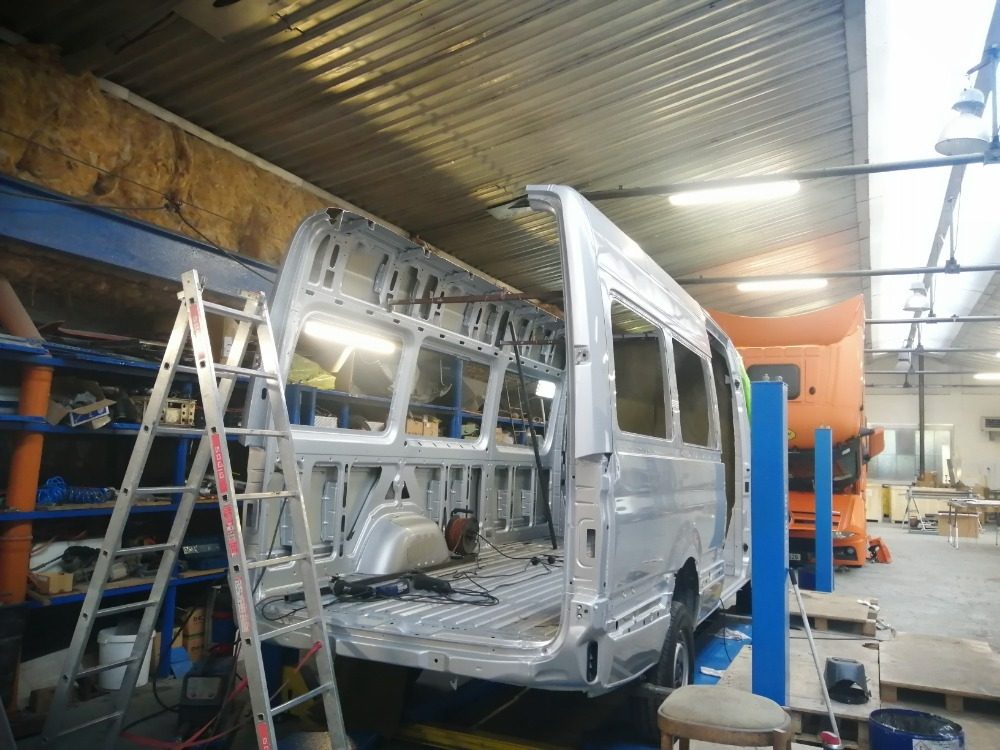
How we build a bespoke vehicle
We will build you a bespoke vehicle, boat or trailer — to your idea, from the first sketch to a prototype, or a whole series. We work with professional designers on the styling. Everything to the UNECE regulations in force across the EU, and registered in the vehicle documents.
Widening a vehicle
Van chassis — Mercedes, Fiat, VW, Hyundai, Ford, Iveco and others — can be widened to 2.4 m (7 ft 10 in) including the rear axle. Compared with a conventional box body, this keeps the load floor lower, so the vehicle stays lower and handles better.
On vans we can also raise the payload, sometimes by as much as 700 kg (1,540 lb). The same goes for older vehicles.
Materials
We work in fine sheet metal — stainless steel and aluminium. Stainless goes where impact and water are the problem: underbody frames, arches, side steps. Aluminium goes where weight decides — bodies, decks, hulls.
What we can do with a chassis
The numbers a build
lives or dies on
Most conversions fail because the vehicle will not pass approval afterwards. These are the figures we know how to work with so that it does.
Including the rear axle. Compared with a box body the load floor stays lower, so the vehicle is lower and handles better. (7 ft 10 in)
How much more we can get out of a van — older vehicles included. (1,540 lb)
At the rear by lowering the spring mounts while keeping the spring parallel to the road, at the front by reworking the axle beam with bracing struts. (7.9 in)
Our own design, calculated for axle loads up to 3,500 kg. On the RiverVan we had to develop and test them to get the vehicle through approval.
With the engine able to be switched off and restarted in the water. (35 in)
Including the braking recalculation and registration in the vehicle documents. (7,720 lb)
How it runs
From sketch to
registration
-
01
Design and technical data
The styling proposal and the technical documentation for the conversion. We work with professional designers on the design.
-
02
Stiffness and strength analysis
Calculating what the conversion does to the structure — before the first sheet is cut.
-
03
Manufacture and fitting
Reworking the frame, body and axles, making and fitting components, the interior including final upholstery, wrap and paint.
-
04
Testing
Where the regulations require it, the part goes to an accredited test house. The records are below.
-
05
Sign-off
Dekra, TÜV SÜD or the state test authority — depending on the conversion and the vehicle category.
-
06
Registration
The changes are entered in the vehicle documents, or a new document is issued. This is the point where it shows whether the build was done properly.
Testing
Evidence, not claims
Almost every body shop mentions approval on its website. These are records from an accredited test house and from field testing of our own builds — recorded so there would be something to show, not for the website.
Static test, TÜV SÜD Czech
report 62128_19_BA seat frame with its belt anchorage under tensile load. The display counts up the applied force, the structure deforms and the test records when and how. The test was carried out by the accredited test house TÜV SÜD Czech s.r.o.
Test No. 2 — load on the backrest
Pull applied across the top of the backrest, force rising steadily to the end of the test.
Test No. 6 — load on the belt anchorage
Pull at two points at once: the backrest and the seat-belt anchorage.
Field testing
Every amphibious build goes on the water before handover. Not as a demonstration — to find out what still needs fixing.
RiverVan Trimaran EP1 final test
Trial cruise before handover — entering the water, cruising, coming out.
Handling on the water
Turning, reversing and holding a course with a floating van.
RiverTrailer Alligator — first water test
First launch of the aluminium craft, checking stability and draught.
RiverTrailer Alligator — current version
The finished craft in its rescue-service specification.
Trailers for the Kia plant in Žilina
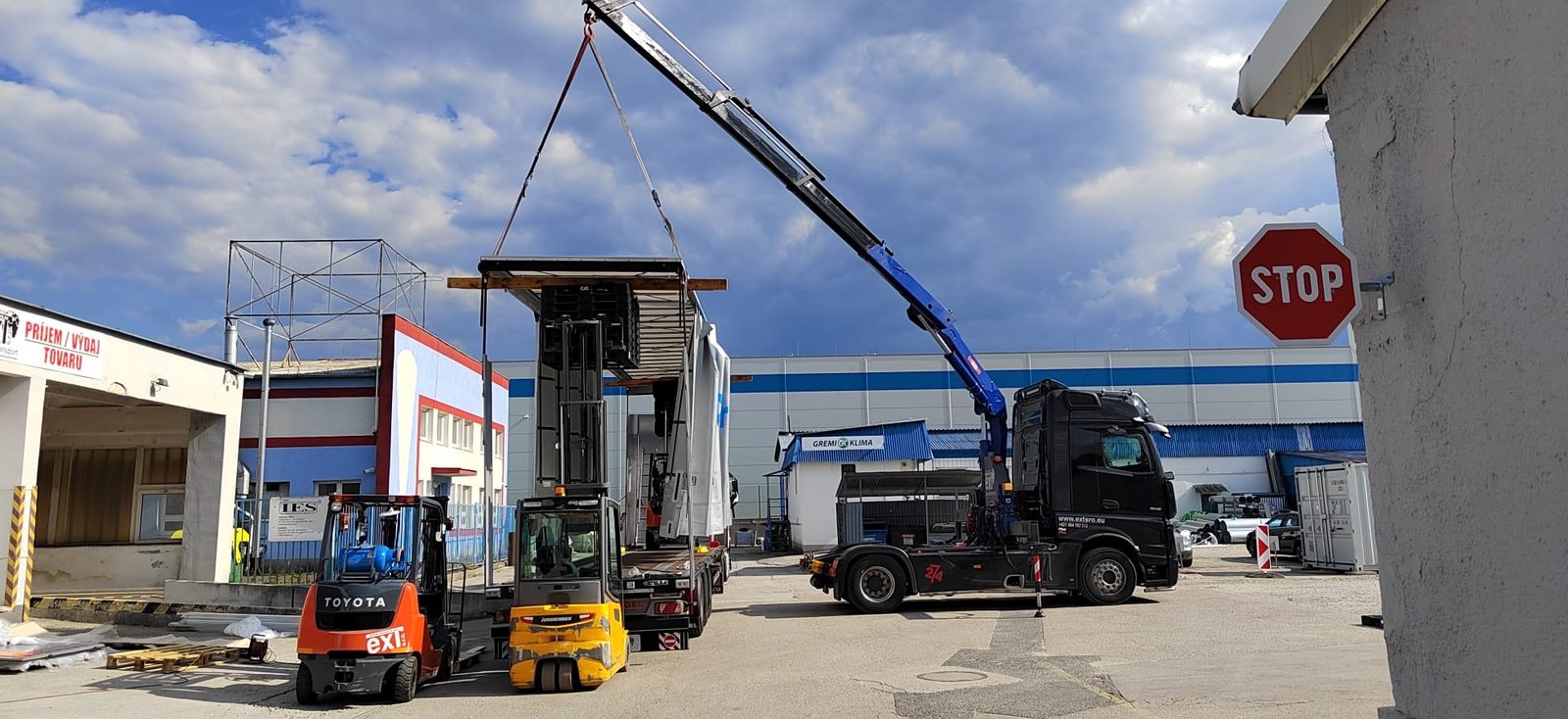
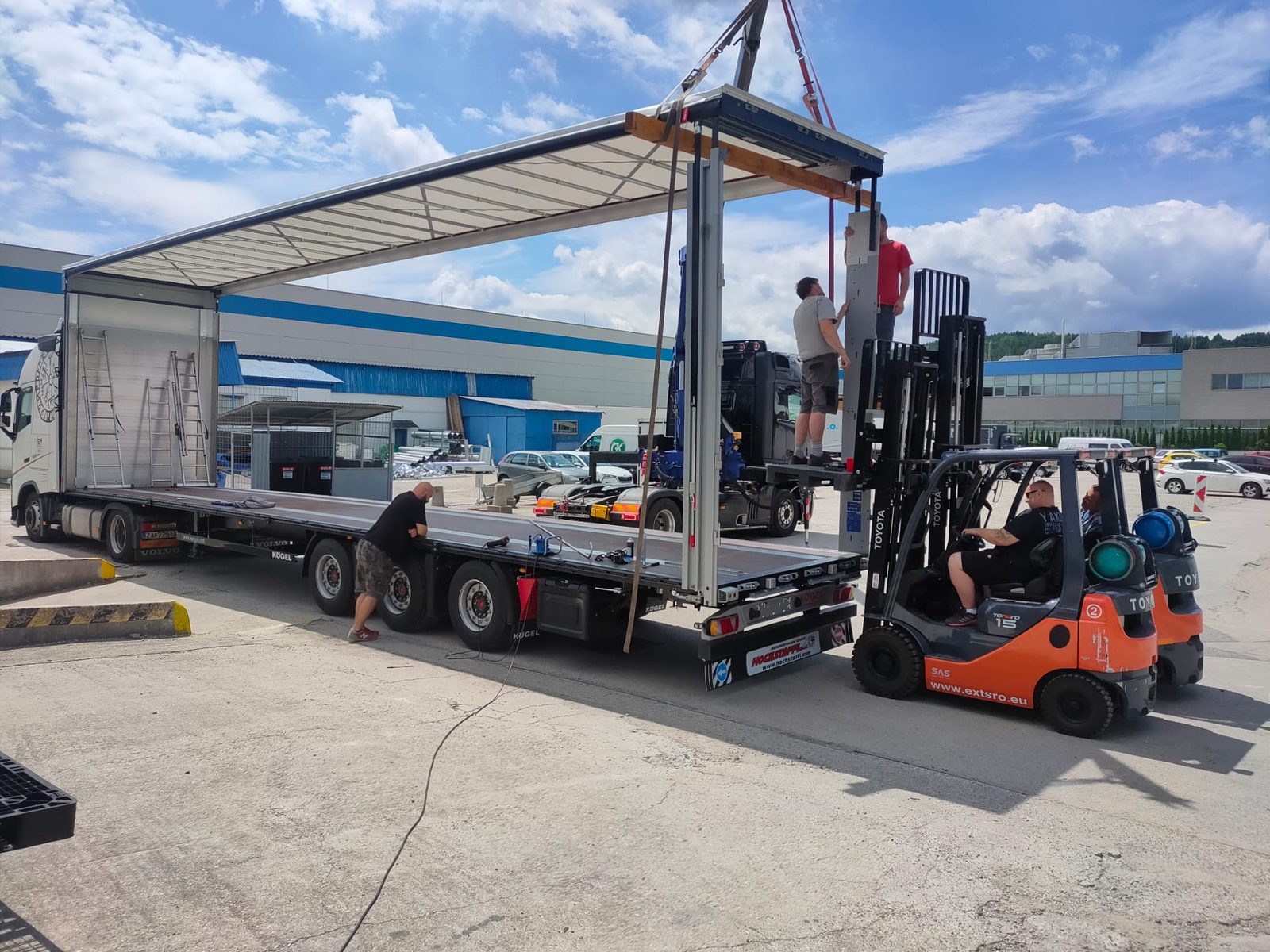
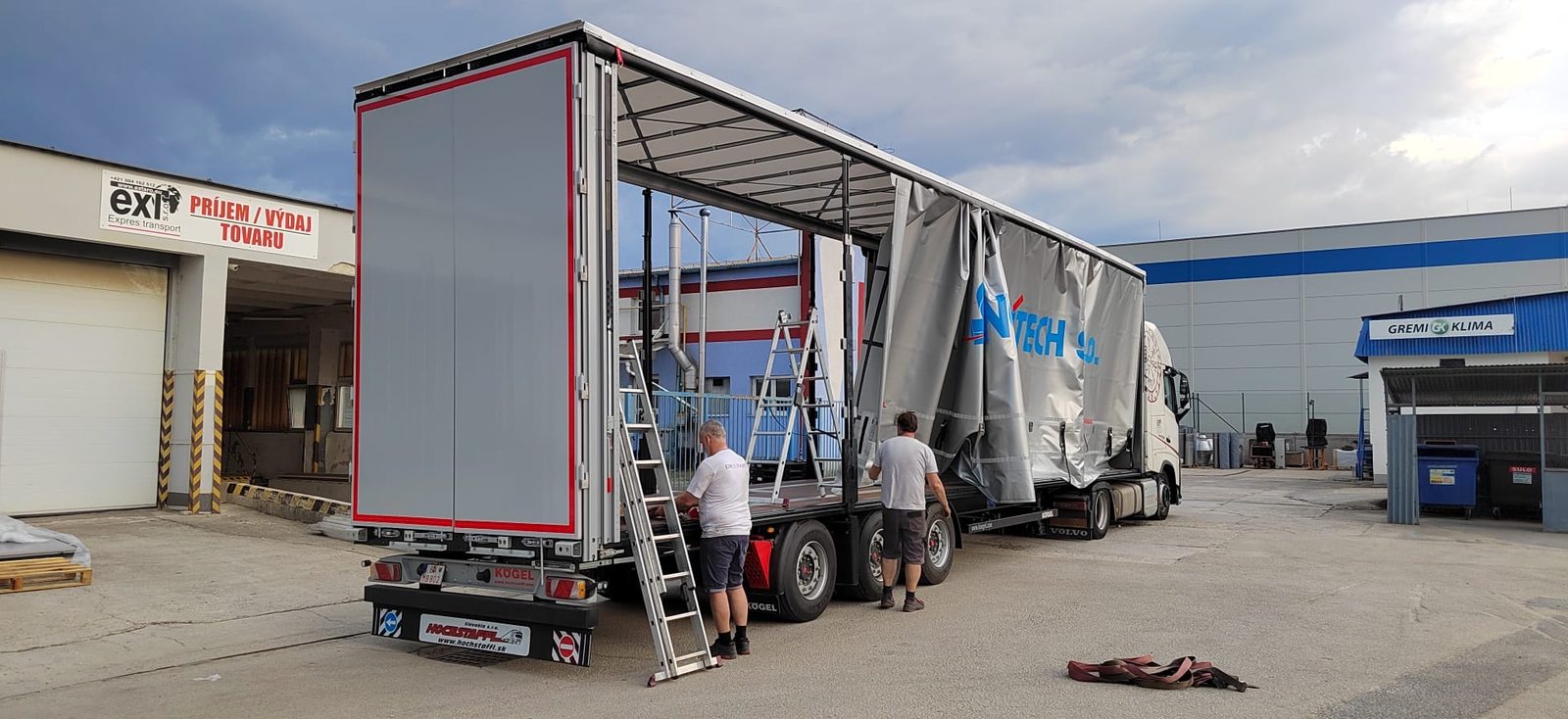
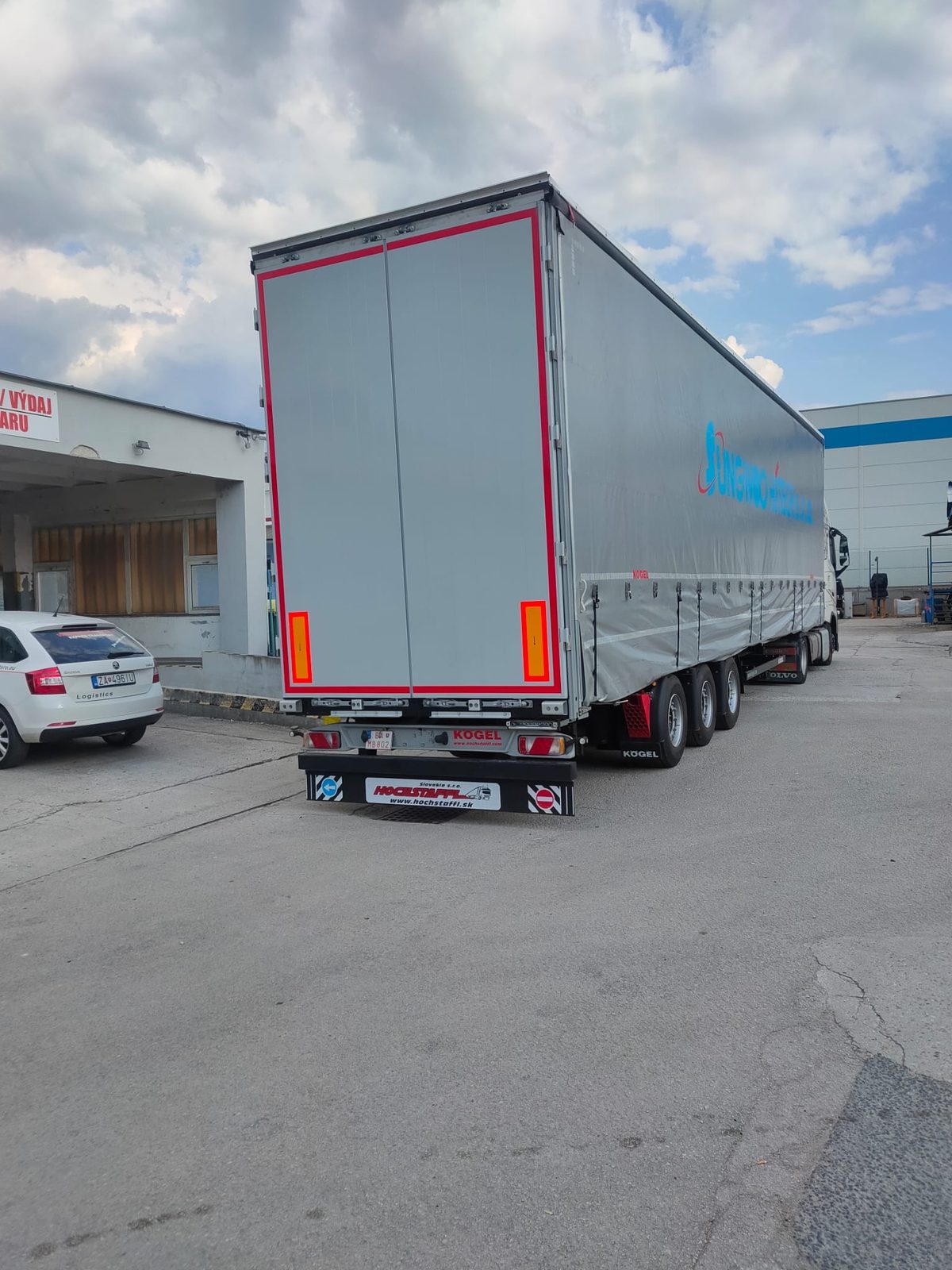
industrial contractIn Slovakia we built special trailers for the Kia car plant that only run between its production and warehouse halls. They stand 4.5 m (14 ft 9 in) high and lift a further 30 cm hydraulically for loading. At that height they are oversize and could not be delivered finished, so assembly and raising took place on site in Žilina. They operate within ten kilometres of the plant.
Consultation
Let's talk about
your project
Come with an idea, leave with a proposal. We will walk through it in the workshop itself, among the vehicles being built — two hours from most European capitals, a direct flight from the US east coast. We will tell you straight away what works, what does not — and what it means for approval.
The workshop where they are built
A tour of the workshop can be part of the consultation. By arrangement we will show you vehicles under construction — the structure a finished one hides.